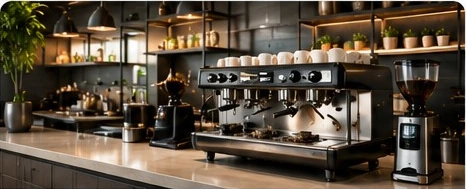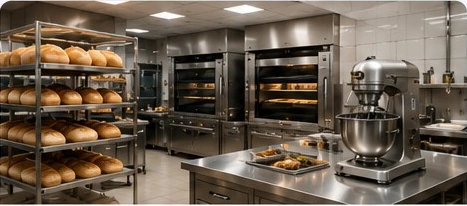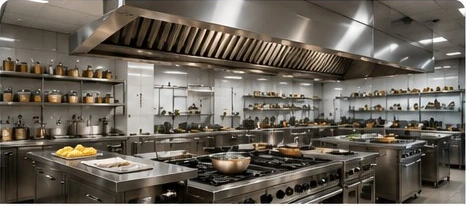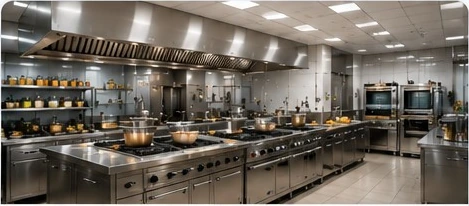
A restaurant equipment list should be built around the menu, service style and expected covers. Start with the stations that directly support food safety and production, then add specialist equipment where the menu justifies it.
1. Plan the restaurant operating model
Define the menu, seating capacity, service hours, takeaway volume and busiest expected period. A quick-service restaurant prioritizes speed and repeatability, while a full-service restaurant may need more flexible preparation and finishing stations.
- Number of seats and target table turns.
- Peak orders per hour.
- Core menu items and cooking methods.
- Dine-in, takeaway and delivery proportions.
- Staffing levels and kitchen skill requirements.
2. Cooking line essentials
Select the cooking line according to the menu. Common restaurant equipment includes a commercial range, oven, fryer, griddle, chargrill, salamander or specialized cooker. Provide suitable extraction above heat- and grease-producing appliances.
Range or cooker
For boiling, sautéing, sauces and general pan work.
Commercial oven
For roasting, baking, finishing and batch production.
Fryer
For chips, chicken, snacks and other high-volume fried items.
Griddle or grill
For burgers, meat, breakfast items and fast à la carte production.
Do not buy every appliance automatically. Each machine should serve a clear menu function and have enough output for the busiest service period.
3. Refrigeration and storage
Separate storage by temperature and operating purpose. Upright chillers and freezers provide bulk storage, while under-counter units can keep ingredients close to preparation and cooking stations.
- Upright refrigerator for daily ingredients.
- Freezer capacity for longer-term stock.
- Under-counter or prep-counter refrigeration where speed matters.
- Dry-storage shelving raised from the floor.
- Ingredient bins and labelled food-safe containers.
- Receiving and stock-rotation space.
4. Preparation equipment
Preparation equipment reduces labour and improves consistency. Depending on the menu, consider stainless worktables, preparation sinks, planetary mixers, food processors, meat slicers, vegetable cutters, blenders and weighing scales.
Create separate work zones for raw proteins, vegetables, bakery preparation and ready-to-eat food where practical. Provide adequate countertop space before adding more machines.
5. Warewashing and hygiene
Plan separate handwashing, food preparation and utensil-washing facilities. The washing area should handle peak plate, pot and utensil volume without blocking production.
6. Service and front-of-house equipment
Match service equipment to the customer journey. You may need heated holding, pass shelves, beverage dispensers, refrigerated displays, cashier counters, trays, trolleys, cutlery, crockery and takeaway packaging.
Holding equipment should support short service windows without becoming a substitute for fresh production or proper temperature management.
7. Smallwares and support items
Smallwares are frequently underestimated in opening budgets. Include cookware, knives, chopping boards, gastronorm pans, storage containers, thermometers, scales, ladles, tongs, trays, cleaning tools and protective equipment.
Create a quantity list by station and include replacement stock for high-use items.
8. Opening priority checklist
Essential to open
Cooking line, refrigeration, safe preparation surfaces, washing facilities, storage and service basics.
Add for efficiency
Food processors, specialized prep machines, under-counter refrigeration and higher-capacity washing equipment.
Add as demand grows
Extra production lines, larger displays, specialist menu equipment and additional cold storage.
Prioritizing equipment prevents the opening budget from being consumed by impressive machines that are not critical to daily sales.