A successful coffee shop setup balances beverage quality, service speed, counter space and customer experience. Start with the drinks and food you intend to sell, then design a compact workflow that staff can repeat consistently during peak periods.
2. Build the espresso station
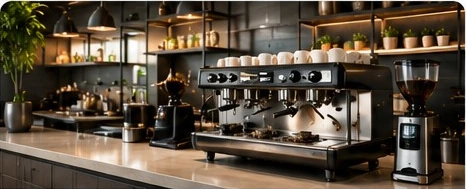
The core espresso station normally includes a commercial espresso machine, one or more grinders, water filtration, knock box, tamping area, milk jugs, scales and nearby refrigerated milk storage.
Espresso machine
Choose group count and steam capacity for expected peak orders.
Grinder
Use a commercial grinder that supports consistent dosing and adjustment.
Water treatment
Protect beverage quality and machine components according to local water conditions.
Milk workflow
Keep refrigeration, jugs, rinsing and waste handling within easy reach.
Confirm electrical load, water connection, drainage and counter dimensions before ordering the machine.
3. Cold drinks and refrigeration
For iced coffee, milkshakes, smoothies or juice, you may need commercial blenders, ice maker, under-counter refrigerator, upright chiller, bottle cooler and ingredient containers.
- Calculate ice demand for drinks and peak weather conditions.
- Keep milk and perishable ingredients close to preparation.
- Separate customer display refrigeration from bulk back-up storage.
- Allow ventilation space around refrigeration equipment.
- Plan cleaning access for blenders, dispensers and ice equipment.
4. Food preparation and display
A café serving pastries, sandwiches or light meals may require a convection oven, microwave, panini grill, preparation table, refrigerated prep counter and heated or chilled display case.
Display capacity should reflect realistic sales turnover. Oversized displays can use unnecessary energy and may encourage excessive stock holding.
5. Water, sinks and washing
Provide dedicated handwashing and suitable utensil washing. The espresso area may also need a pitcher rinser, glasswasher or compact dishwasher depending on service volume and cup policy.
Plan drainage carefully around coffee equipment, ice machines and sinks. Water treatment and scheduled cleaning are essential to consistent beverage quality and reliable machine operation.
6. Design a fast counter workflow
Avoid placing the cashier, espresso operator and collection point in the same narrow area. Store cups, lids, syrups and takeaway materials at the station where they are used.
Use under-counter storage and vertical shelving to protect working space without making the counter feel crowded.
7. Smallwares and consumables
Include cups, saucers, takeaway cups, lids, straws where required, spoons, trays, tampers, knock-box liners, cleaning brushes, thermometers, scales, storage bottles, labels and cloth systems.
Build opening stock quantities around delivery frequency and available storage rather than buying excessive consumables.
8. Startup priority plan
Core beverage production
Espresso machine, grinder, water treatment, milk refrigeration and essential bar tools.
Menu-support equipment
Blenders, ice, food heating, displays and additional refrigeration.
Growth upgrades
Second grinder, higher-capacity ice, extra display space and expanded food preparation.
Invest first in equipment that protects drink quality and service speed. Decorative or specialist machines can follow once sales patterns are clear.